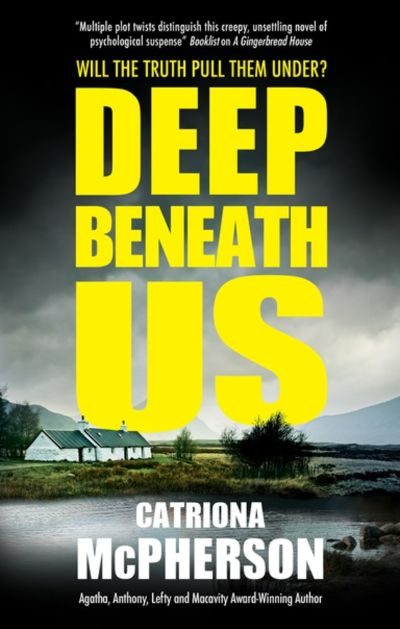
Tabitha is compelled by the spiteful actions of her ex-husband to move back to her childhood home. This is not a cozy, safe space as one might hope. It is a sort of compound: two schoolhouses on different sides of a reservoir, one occupied by her family, the other by her uncle’s family. In the past, four cousins, Tabitha the youngest, ran and played like a pack. But her mother is an unstable artist, her father and uncle killed themselves, and her sister and cousin married each other at age 16. Now, cousin Davey purportedly dies by suicide as well, leaving his property to Tabitha. But is that what really happened? Davey’s two cronies, along with three smart teens, use skills learned from TV crime dramas and DNA analysis to get to the bottom of it all. The characters are captivating, the atmosphere is dark and dour, and the wretched weather contributes to the overall tone of the book. The novel is set in Scotland and the use of Scottish dialect and expressions is sometimes daunting, but never gets in the way of the telling. To say that the plot here is a tangled mess may be an understatement, but the untangling is a treat.
Review
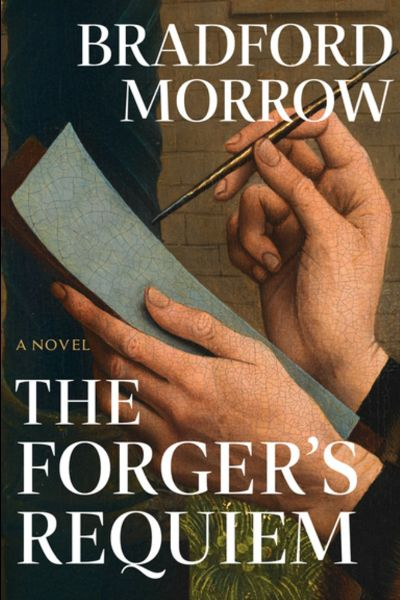
Literary forger Henry Slader unexpectedly finds himself in an Edgar Allan Poe story when he, concussed and bruised, awakens in a shallow grave. Shakily digging himself out, Slader gradually remembers that Will, his old rival, and his daughter, Nicole, assaulted him with a shovel after a deal involving the forgery of a rare Poe book went bad. Determined to avenge himself on Will (20 years of bad blood between the two men includes a violent attack that landed Slader in prison) and needing to raise cash, Slader blackmails Nicole, a budding artist and a talented forger, threatening to expose her father’s role in the unsolved murder of her uncle. After forging inscriptions by such authors as Ernest Hemingway and Gertrude Stein, Nicole is tasked with creating a cache of letters by Frankenstein author Mary Shelley, a valuable trove that will enable Slader to retire permanently from the forgery business. But even the best-laid plans can go astray. A shocking climax at Mary Shelley’s grave in Bournemouth, England, leads a stunned Nicole to wonder what “drives people to such lunacy.” Toggling between Slader’s third-person perspective and Nicole’s first-person narrative, Morrow offers fascinating insights into the literary forger’s art. Although this is the concluding volume to the author’s trilogy (The Forgers, The Forger’s Daughter), it can be read as a dark, twisty standalone thanks to plenty of backstory.
Ted Bell passed away last year, and Ryan Steck (Out for Blood) has continued the series with this terrific entry into the world of Alex Hawke. Hawke wants nothing more than to settle down with his fiancée and son, but a crisis intervenes, and he must become the ruthless spy England needs him to be. A referendum to split Scotland from the United Kingdom is upcoming, and King Charles III mysteriously vanishes while out on a hunt with his friends, baffling his security detail. Hawke and his allies have 72 hours to find the King—the monarchy and the entire United Kingdom will never be the same if they don’t. Of course, there is more in play than the King’s whereabouts, and failure means the toppling of the entire British government. Steck is the perfect author to continue Hawke’s adventures. He channels Ted Bell, creating a story that seems to come from Ted himself. The story is a terrific launch point for newcomers, as Steck brilliantly juggles the details from previous books while not making them seem repetitive. Fans of the series will love seeing their favorite characters back in action, while readers new and old will enjoy this mix of Clive Cussler and James Bond and be eager to see what Steck has in mind next for our hero.
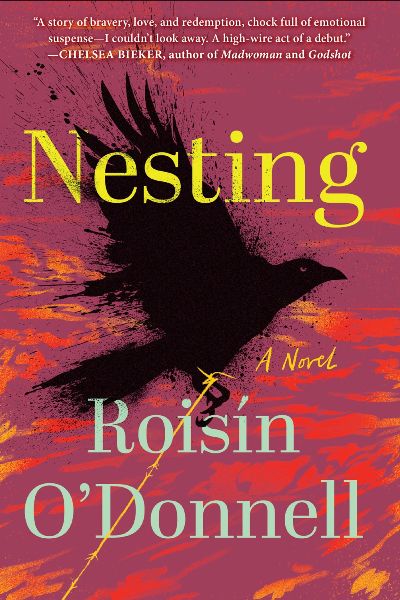
Even during her sly, vicious husband Ryan’s “good” moments, Ciara feels “part of her body (toe tips, ear lobes, the backs of her knees) is listening, tense, on high alert.” And in his bad moments, “The toppled chair. The smashed bulb. The broken handle. Her bones and blood.” She’s left before, but his rage at her absence was too dangerous to endure. But when she sees a new opportunity, she takes her two small daughters and flees. Here the reader will begin to understand the naivete of “why doesn’t she just leave?” (Why doesn’t anybody ever ask why he doesn’t “just” leave?). Dublin’s rental market is impossible, so Ciara and the children are homeless, forced to stay in a cramped hotel room provided by the city. Ciara, who is pregnant with her third child, has no job, at controlling Ryan’s insistence, of course. Her mother-in-law tells her that she’s going to hell for treating “poor Ryan-Patrick” this way. Child support is non-existent, and Ryan is determined to take full custody of the children even though he appears to hate them and has never lifted a finger to care for them. Watching Ciara claw her way out of this is a gripping view of endurance, terror, bravery and the small and large kindnesses that make her life bearable. The characters here are superbly drawn, the dialog spot on, and I can’t wait for more from this debut novelist.
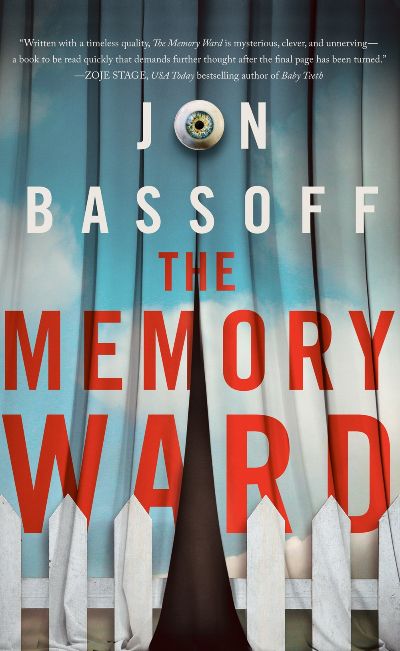
Mailman Hank Davies lives in the small town of Bethlam, Nevada, and delivers to the same people every day. It’s predictable and consistent. One morning, he accidentally trips over a tree branch, and one of the envelopes opens, and he can see the letter inside. The page is blank. He secretly opens a couple more letters, which are also blank. When he talks to his wife, Iris, about the mystery, she shrugs it off and reminds him he needs to take better care of himself and not stress over trivial things. After Hank’s accident, his doctor warns him to take things easy. As Hank begins questioning his life and memories, a neighbor comes by in the middle of the night and says, “You can’t trust them. They mean you harm.” This cryptic message sends Hank on a perilous journey, questioning everything and everyone in his life. But if he learns the truth, it won’t set him free: It will destroy him. Bassoff weaves a tale that mixes Ira Levin with the best horror films, where you want to yell at the screen to warn a character of what is about to happen. This novel is an atypical chain, in which the more the story twists, the tighter the chain becomes instead of unwinding. Readers will not be able to put this book down until they learn the mystery behind the façade.
Computer science professor Penny Collins has been dragged by her sister to a tag sale being run by Anthony, who’s recently deceased uncle has left him—as handsome as he is aloof—with his estate, which he is now trying to unload. Things go from bad to worse when Penny’s toddler nephew yanks open a closet door, only to have a dead body tumble out. From there, Anthony tries to avoid Penny and her 101 questions, while Penny can’t stop herself from trying to get to the facts. Or at least get to Anthony (did I mention how handsome he is?). Sooner rather than later, the two end up locked together in their own closet, and when they finally emerge, they agree to work together. Anthony, it turns out, works as a “fixer,” but one of the good guys: he doesn’t kill, he just, well, fixes things. There is a lot swirling around these two, including the missing wife of a technology billionaire—Anthony is involved—and eventually the FBI arrives on the scene. There are so many remarks from Penny about how Anthony smells, it’s quite remarkable; this could well be the first olfactory novel. In any case, I’m planning to splurge on a bottle of Tom Ford’s Eau d’Ombre Leather for when reading the next volume, which I sincerely hope comes along sooner rather than later.
The city of Zurich, surrounded by water, offers scenery, culture, scientific innovation, and activism to its citizenry. Rosa, a member of the maritime police, usually swims or rows daily, but takes a morning off to have her eggs harvested and frozen. The body found in a fisherman’s net days later turns out to be that of the doctor who performed the procedure. Despite her personal involvement, Rosa is assigned to work the case with the regular police department, awkwardly partnering with a former love interest. Multiple crimes, seemingly unconnected, ultimately come together. Cutting-edge genetics, not usually mystery fodder, is the key. Rosa and her friends and colleagues are engaging, and unlike her American counterparts, Rosa has time for an active social life. The translation is smooth but still carries a cadence and flavor that keeps its context. Intrigue, corporate greed, runaway science, and sexual infidelity come together in a complicated story that may send readers to a map of Zurich for the bigger picture.
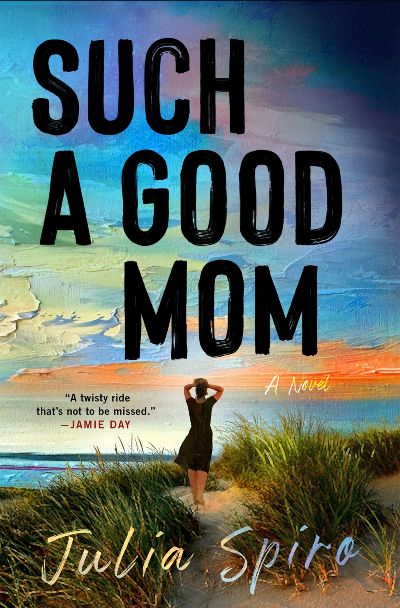
There’s more medical follow up for a sprained wrist than for having a baby, Brynn Nelson notices. She tells everyone she’s fine after her son’s birth though she’s very far from it. Every other sleepless new mother does just fine, she thinks, so there must be something wrong with her. Her husband, Ross, loves the time he spends with his son but it’s a few moments here and there and he has no idea of the deep pit of fear his wife is in. Brynn has more or less lost touch with her own mother since staying on Martha’s Vineyard with her well-off new in-laws while her poorer parents moved off-island. She’s now firmly a Nelson, and when Ross tells her a family secret after a young woman’s body washes up on the beach, Brynn finds that she has much more facing her than the exhaustion and fear of new motherhood. This thriller excels in portraying the social dichotomy that is life in an expensive resort town, a split that’s echoed throughout the book in breaks between Brynn and her family of origin, the break between the life she could have had if she had chosen another boy and this one, and her life pre- and post-motherhood. Absorbing and satisfying.
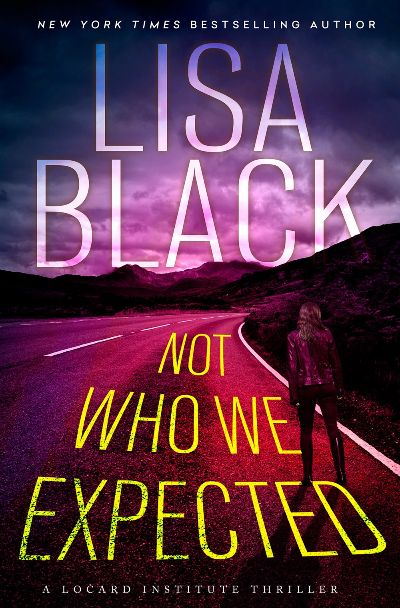
Black mixes her knowledge of crime-scene analysis with the terrifying world of cults in her latest thriller. Billy Diamond, a legend in the music business, approaches forensic analysts Rachael Davies and Ellie Carr, who run the prestigious Locard Institute, a research center. His daughter, Devon, went on a retreat with her boyfriend, Carlos, and neither came back. When Carlos’s body is found near the ranch, and his death does not appear to be accidental, Rachael and Ellie work out a plot to learn the truth. Ellie goes to the retreat as a recruit, while Rachael tries to understand how Carlos died. Ellie feels comfortable at first, but the more she learns, the more terrified she feels. And the person she’s supposed to find, Devon, appears to have no interest in leaving and might be the cult leader’s number two in the organization. Black handles suspense like a pro, and every element of the story is unpredictable, with misdirection, manipulation, and challenging of the reader’s expectations. The cult and everyone following Galen, the leader, come across as realistic and sympathetic. Readers will understand why these people are devoted and not questioning what’s really going on. Familiarity with the previous books is unnecessary, and be prepared to say after finishing this novel, “That was not what I expected.”
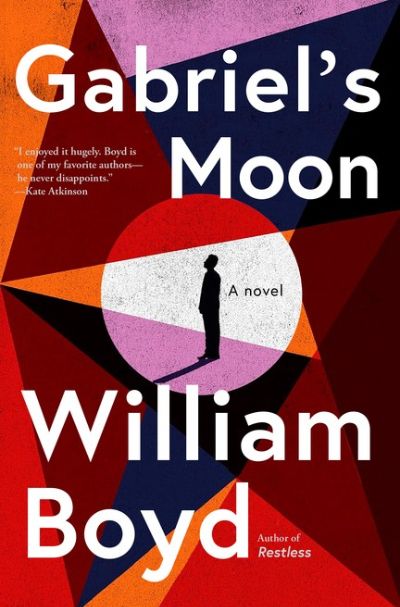
In his 2013 James Bond novel, Solo, Boyd sent the iconic secret agent to 1969 Nigeria. While the protagonist of his new book shares Bond’s love of good liquor and beautiful women, he is a reluctant spy, and the author here is interested in exploring the morally murky world of Cold War espionage, double dealings, political murders, and defections. It is August 1960, and British travel writer Gabriel Dax is interviewing Patrice Lumumba, the Prime Minister of the newly independent Republic of the Congo. Lumumba, who insists the interview be recorded, mentions that certain foreign powers aim to assassinate him. On the flight back to London, Gabriel notices an attractive older woman reading one of his travel books. Other odd incidents occur. Gabriel’s editor cancels the Lumumba piece and demands his notes and tapes, which is not standard journalistic practice. Instead, Gabriel buries the tapes in his garden. The woman on the plane, Faith Green, turns up at Gabriel’s door and asks him to do “small favors” for MI6, similar to the ones he does for his elder brother, Sefton, in the Foreign Office. Gabriel initially refuses but falls under Faith’s seductive spell and embarks on his first assignment in Spain. The writer is soon caught in a twisty labyrinth of lies and betrayals, and, like Michael Corleone in Godfather, Part III, gets pulled back into the spy game each time he tries to extricate himself from the manipulative Faith’s machinations. At the same time, Gabriel struggles to understand, through analysis, the childhood trauma—his mother’s death in a fire—that has scarred his life. This first-rate complex and suspenseful historical thriller will resonate with fans of John le Carré and Alan Furst.