A cryptozoologist’s views are not exactly recognized by the whole of the scientific community. But a dead woman in small-town Wisconsin brings law enforcement to cryptozoologist Morgan Carter, as they know her as a source of assistance. Lydia Palmer was found in a rural area with a broken neck and her throat ripped open by what could be the “Beast of Bray Road,” a local legend that has been capturing imaginations for years. Morgan is pretty sure from the outset that there is some human source to this mystery. Lydia, a widow with an adult son disabled from the car accident that killed her husband, was always looking for a way to make money. She wasn’t particularly wise about her methods, but there is still no good reason for her to have been in dark woods in the middle of the night. Sightings of the beast seem realistic, but Morgan has a good idea of what caused the deep scratches in Lydia’s car and body, and it’s not what people think. Another dead body and faked historic documents, among other things, lead Morgan to a conclusion that is worse than any beast. Though part of a series, this is nicely framed so that the back story stays in the background and readers new to Morgan and trusty hound Newt can keep up.
Traditional
Taut and intense, this novel is sure to set every reader who picks it up on edge. Charlie Kilgore was an infant 25 years ago when, at Idlewild, their family camp, his father murdered a man, went on to stab Charlie’s mother, left her for dead, then drifted off into the White Mountains of New Hampshire, never to be seen again. It’s a legacy of horror that Charlie hears from time to time as he grows up, including how his older brother saved them both by hiding them in an ancient rowboat on the lake. But soon enough, WASPY, old Idlewood returns to its annual summer silence and secrets. Until Charlie, an aspiring journalist, blows everything up. While writing and editing a podcast about the camp, Charlie weaves together various narratives that point to an even greater story than the murder, exposing the truth, awakening the past, and placing himself in danger. What Happened Next is certainly one of Hill’s best works with its sharp analysis of families and powerful presentation of the individual in an environment where no one can be trusted.
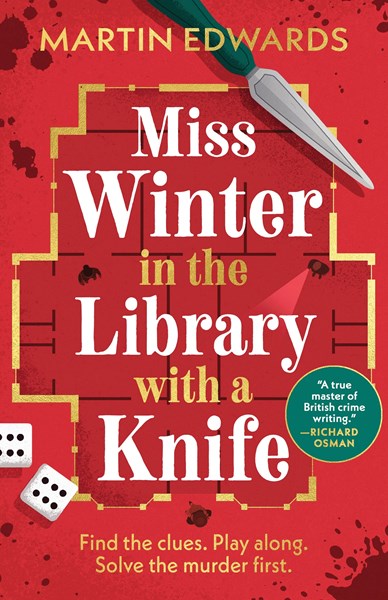
In a clever standalone homage to Agatha Christie and other Golden Age authors, Edwards (Rachel Savernake series) invites “external observers” (i.e., readers) and “analysts” (reviewers) to participate in an interactive puzzle mystery-within-a-mystery set in a remote, snowbound Yorkshire village. The mysterious Midwinter Trust has brought six down-on-their-luck people with connections to crime fiction (including washed-out author Harry Crystal and laid-off book publicist Poppy de Lisle) to Midwinter village in the rugged Pennines to solve a fictional murder over the Christmas holidays under the close supervision of six Midwinter Trust employees. But the game soon goes awry when one of the guests, podcaster Baz Frederick, is found dead in a frozen creek; it is determined that he fell accidentally. But two more deaths are more than coincidental. Is a killer on the loose? As the players struggle to solve both the actual murders and the fictional one, readers can apply their own detective skills in deciphering the clues the author sprinkles throughout the podcast excerpts, text messages, journal entries, webpage excerpts, and third-person narrative. He even provides a Cluefinder (a nod to Golden Age detective fiction) but warns sternly that readers who cheat will be disqualified. If you love to play Clue and are a fan of atmospheric cozies, this is a fun, diverting read.
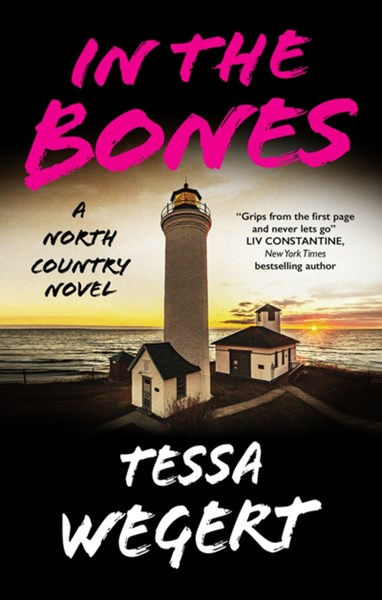
Beautiful, upstate New York, small town Cape Vincent is a place where everybody knows one another. When famous retired hockey player Mikko Helle buys a waterfront house and completely renovates it, he hires Nicole Durham, a local woman, to clean before he moves in. She finds a young woman secretly living inside the house, then the police investigate and discover the remains of another young woman in the basement. With a string of bizarre thefts of items that seem to have no value, the squatter in Helle’s house appears to be the perfect suspect for both the break-ins and the murder. Suspicions mount and trust disappears when Nicole learns about her husband’s surprising connection to the unexpected house guest, the dead body, and Helle’s secret business dealings. How do you discover the truth when everything is built on lies? Wegert creates a vivid town and realistic inhabitants with this taut and compelling mystery. Comparisons to Gillian Flynn’s Sharp Objects and books by Jane Harper and Lucy Foley are warranted
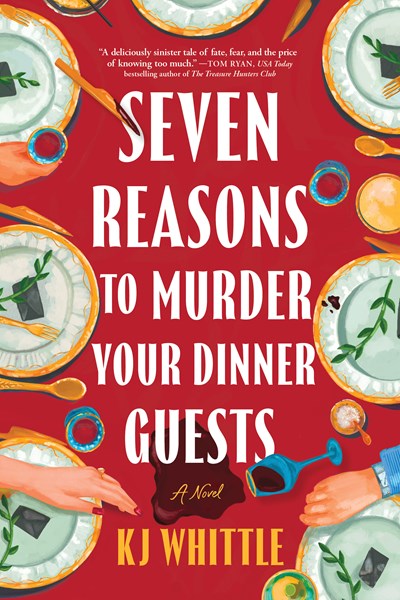
When Vivienne, an admittedly dowdy and somewhat bitter middle-aged magazine editor, receives a mysterious invitation to a dinner party, she almost throws it away. Reconsidering, she goes to the elusive address to find Serendipity, which appears to be a pop-up fine dining experience. None of the other six guests has any relation to her, or one another, it seems. Readers get to know them through their actions and words, and it would be easy to start guessing what is to come, but the highlight of the dinner is when each finds an envelope at his or her place setting. Janet, the most spontaneous (and likely most drunk) of the guests, tears hers open to find a card that states You will die age 44, and she is just weeks from her 45th birthday. Fear, accusations, and incredulity sweep across the group, and then, dismissing it as a publicity stunt, they depart. But then the words on the cards start coming true. As the guests tell their stories and admit to their sins, readers see Vivienne emerge as a caring and clever amateur sleuth who finally has a family to protect. A terrific addition to the current trend of If you knew you were going to die, how would you live your life? novels.
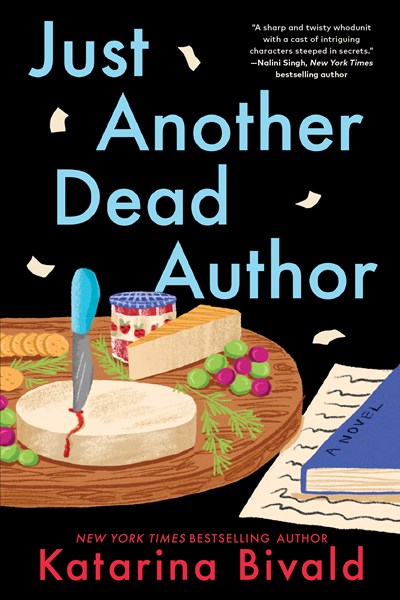
Swedish author Bivald gives readers another delightful twisty tale (following The Murders in Great Diddling) with well-known mystery author Berit Gardner in the lead role, along with a diverse and quirky cast of characters, most of whom are writers, agents, and publishers attending a retreat outside Lyon, France. Against the backdrop of the somewhat dilapidated yet beautiful Chateau des Livres, the envy and adoration amongst the attendees begins to merge, even as they continue to workshop “Dramatic Plot Twists” and “Portrait of a Writer on Fire.” When John Wright, headliner and bestselling author, dies in the front row during Berit’s welcoming address, nearly everyone is a suspect. A series of reveals follows, including two Mrs. Wrights, a partial manuscript, and a kitchen crush. When another particularly annoying attendee is found stabbed, the stakes are raised. With the help of sharp-eyed observers and a DCI Ahmed, a friend from England, Berit and her rep Sarah, who happens to be the daughter of John Wright’s agent, start to work out whom the murderer might be, much to the chagrin of local authority Commissaire Roche. Fans of Kemper Donovan’s Ghostwriter series will eat this up. A fun romp through the publishing industry is icing on the cake!
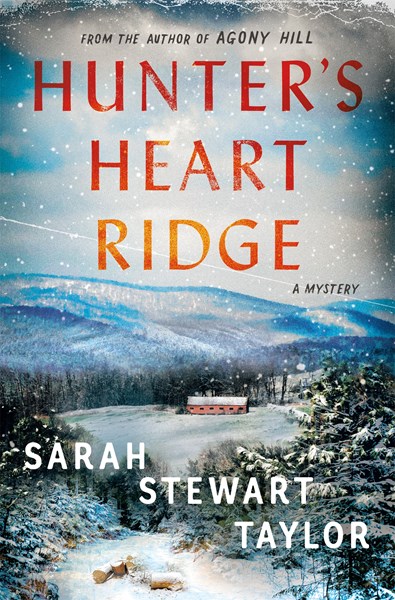
Stewart brings us back to a time of tumult: mid-1960s rural Vermont. In this sequel to Agony Hill, we are reintroduced to Detective Frank Warren, a good guy whose efforts at law enforcement—assisted by Trooper “Pinky” Goodrichsend—see the two of them traipsing up and down the county at all hours. This book opens as one of the visitors to the Ridge Club, a hunting and fishing lodge exclusively for rich and distinguished men, is found dead, on the same day that deer season opens. A mere coincidence, right? But Frank suspects that there may be more than someone accidentally shooting themselves while cleaning their rifle. So he and Pinky launch an investigation that tangles them up in the Ridge Club members when a violent snowstorm comes along to isolate them even further. This closed-circle narrative is wonderfully well-done, deeply satisfying, and a compelling portrait of a community undergoing change. Readers who enjoy these books will also appreciate Julia Spencer-Fleming, William Kent Krueger, and Ausma Zehanat Khan.
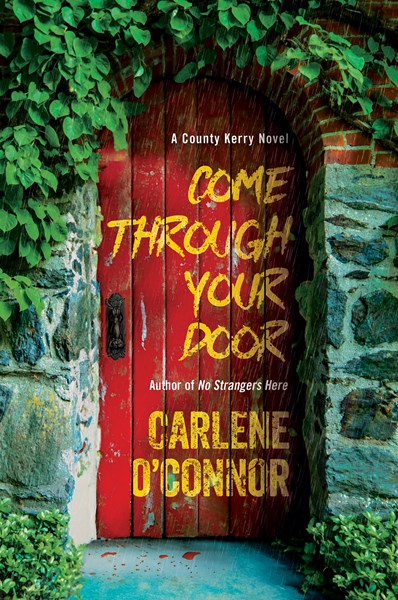
Twists within deceptions are at the heart of O’Connor’s story of insanity, confusion, and murder. Some readers, in fact, may need to take notes to keep straight the murder of Annabelle a year ago from what is happening in the present day. Veterinarian Dimpna Wilde is once again at the center of events that involve her assistant, Niamh, with a dead body found in her apartment. Cormac, Dimpna’s love interest, is investigating and is tricked by a fake crime-scene photographer who cleans the scene of evidence and disappears, just one of the outlandish events that occurs. The confusion about who is who and what is what is eventually explained, but hardly makes the situation clearer. There is even a bizarre Irish pun of a name that somehow brings the murderer into focus. This series, while offering much in the way of Irish local color, is far from cozy, and offers a lot of satisfaction for readers willing to untangle all the complicated knots.
Considering the title, you could be forgiven for thinking this is a frothy, fun-filled mystery akin to Only Murders in the Building. And while there is some droll humor here, this book also tackles serious social issues, including domestic violence and a murder that reverberates through the decades. The plot is both simple (Elín S. Jónsdóttir, a famous, older, mystery writer disappears) and complex (she has many friends who would be willing to help her vanish). But what’s the motive? That question lies in the hands of young detective Helgi Reykdal, who should be familiar to many readers from Jónasson’s Death at the Sanatorium. The two books share much in common, including multiple timelines and a rapid pace that keeps the readers on their toes. As the onion gets peeled, and the pieces start to fall apart, the book becomes increasingly transparent. Exhilarating and gripping; fans of Agatha Christie and Nordic Noir will find much to enjoy here.
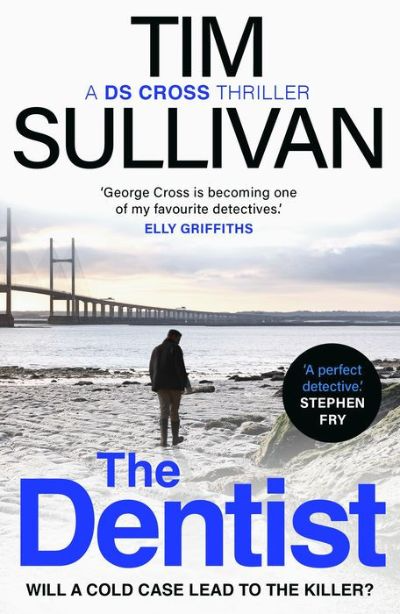
A homeless man is discovered dead in Bristol’s park-like Clifton Downs. End of the story, right? Not if you are DS Cross, who “was always drawn to cases like this. Cases of the dispossessed. The outsider. He related to them because in many ways he was one himself.” Cross has Asperger’s syndrome, and unlike his peers, he is slow to write off the victim. Indeed, his persistence, his dogged examination of all the details, and his reexamination of the evidence manage to keep the case alive—traits that serve the victim but set his fellow officers on edge, ready to wrap up the case. Say what they want, Cross has the best conviction rate of his precinct by a long shot. In seeking to resolve the murder of the homeless man, Cross realizes he needs to go back to a cold case from 15 years ago, despite the scorn he receives from his boss and peers. Socially awkward detectives are nothing new, but Sullivan goes deep into Cross’s self and his struggle to identify the personalities of others: he combines physical expressions with tone to make inferences. The publishing history of this series is extraordinarily confusing, but we know for certain that Grove is publishing the first three books in the series, as well as The Tailor, the eighth, in October. Order multiple copies, there should be a big audience for Cross, both those with Aspergers who rarely see themselves depicted with any accuracy and fans of police dramas like Tana French, Donna Leon, and Louise Penny.