This unexpected and brilliant work examines the work of life: self love, self forgiveness, and the need to have others see us as we really are. Cambridge, MA psychologist Dr. Gregory Weber’s life is chugging along, grumpy teenager daughter notwithstanding, despite Gregory living every day with a horrible mistake he made when he was 17, something he’s told nobody about and that stops every relationship from being whole. All is turned upside down when a patient who claims he asked her to start therapy shows up, a woman he could swear he never encountered before. In no time, he’s deeply in love this intriguing woman and desperate to see every Wednesday at 1:00, even though from the beginning she takes his seat at each session and insists that he’s in the patient role. What happens over time, with old and new secrets increasingly working their way toward the surface, threatens to destroy Gregory’s life as he knows it. The ending here, which includes a startling twist, is both satisfying and teaches readers profound lessons about the nature of what we owe others and ourselves. A must read.

Family Life
“With most first times, you don’t really know it’s the beginning of something,” explains Indian surgeon Dr. Kaiser Shah in a letter to his estranged daughter as he prepares for her to visit. And so it is with the practice that engulfed and destroyed Dr. K’s professional life in an unnamed oil-rich country. The task in question—you must remember, he says, it wasn’t his whole job!—is never mentioned directly, and certainly not described, with the doctor convincing himself ever harder that his secrecy is motivated by benevolence toward his lessors. The punishment for stealing is hand amputation, and before he began “helping out Corrections from time to time,” the procedure was much worse. The story of his involvement in this horror, and how it slowly eats his family life, friendships, and any sense of an inner life, is absorbing; adding a striking air is the doctor’s struggle toward self-acceptance in his letters to his daughter. Extremes underlie the violence here: Dr. K’s quiet sycophancy toward his superiors compared to his friend/rival’s gluttony; his love for his daughter compared to her disgust at his work; his initial bootlicking acceptance of the amputation work compared to his feelings about it after a shocking pivot. Those who enjoy an introspective read are the audience for this one, and they will want to go back to Waheed’s award-winning debut, The Collaborator, for more from this author.
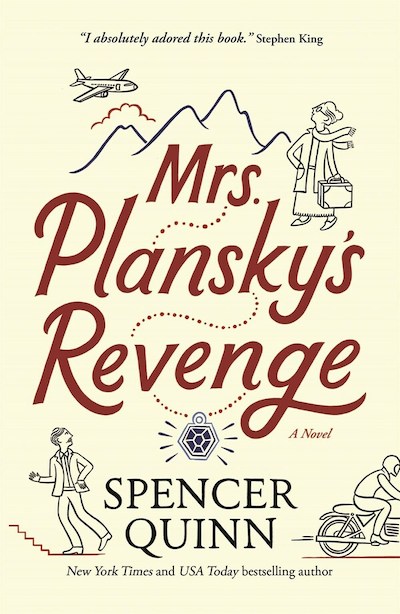
Just try not to fall in love with Loretta Plansky, the plucky, 70ish hero of this sweet, feel-good mystery. A widow—she regularly chats with her deceased husband, Norm—Loretta keeps busy in Florida with friends, family, and a mean game of tennis. She and Norm invented the Plansky Toaster Knife, which toasts as you slice—is that that genius or what?—and they managed to accumulate quite the nest egg. Which is helpful, since Loretta’s kids seem to be forever circling, seeking investments and loans for their hair-brained schemes. So when her grandson Will calls from college, and needs to be bailed out because of a DUI, it’s Loretta to the rescue—or at least Loretta’s bank account. Of course, the caller wasn’t Will, and the normally savvy Loretta wakes the next morning to find herself divested of savings, investments, and worse of all, her self-respect. After reviewing her finances and discovering that to get by, she’d need to do the unthinkable and move her 96-year-old father in with her, Loretta makes the shocking decision to head off, track down the thieves, and recoup her funds. This second part of the novel is a real delight. Yes, there is quite a bit of coincidence and luck, but there’s also a wild cast of characters, some surprising relationships, and real evolution on Loretta’s part. For fans of Simon Brett’s Feathering novels and Richard Osman’s Thursday Murder Club series
Since forever, French authors and screenwriters have been writing about heterosexual marriage and infidelity as though these were the only tales worth telling. They are not. But My Husband certainly does a smashing job of upending the traditional domestic narrative with one that is terrifically creepy, darkly obsessive, and uncomfortably humorous. The finely translated novel—a fast read, if there ever was one—is told from the wife’s perspective, a woman who’s entire being is centered on pleasing/controlling her husband. At one point, she describes herself as co-dependent, but that’s like saying the Pope is Catholic. A beautiful woman with a great wardrobe and a lovely apartment in the Paris suburbs, she pretty much ignores her two young children (“Today, I think I can say with certainty that I could survive the death of one of my children, but not of my husband.”) The perfect life? Restricted to her home with her husband, “endless one-on-one time…Sometimes I picture myself alone on the Earth with him.” Got the picture? But the husband isn’t perfect; sometimes when they are sitting on the sofa, watching TV, he’ll be the first to stop holding hands. Infractions like these deserve punishment, usually moving or hiding his personal belongings. It’s mesmerizing, and try as one might, you can’t look away. As the book progresses, the reader’s anxiety mounts, until we reach an ending which is quite the tailspin. Hip reading groups will tear each other apart over this book.
A brilliant and moving telling of a Black American family’s struggle to survive despite traumas both old and new. It’s 1981 Detroit, and the Armstead family is celebrating Ozro’s 37th birthday. Treated to lunch by his brother, with a large celebration planned for that night, Ozro heads back to work. Except he never gets there. Ozro disappears, leaving his briefcase and suit coat in his office, abandoning his wife Deborah, his young daughter Trinity, his family and friends. Shifting between the perspectives of Ozro, Deborah, and Trinity, Gray reaches back to Orzo’s time as part of the Great Migration, traveling from the south to Detroit in the 1970s; to his early courtship with Deborah, an aspiring singer; and to Trinity growing up in a world that’s been shattered. Ozro’s disappearance is like the sun, with the other characters as moons, forever circling around it. “I wondered about him all the time because absence was not the same as death,” says Trinity. “It was worse, given all the not knowing.” But it turns out that the mystery of Ozro’s vanishing is only one in a series of traumas that extend from his childhood to his death. Beautifully executed and tremendously poignant, this book is absolutely perfect for reading groups.
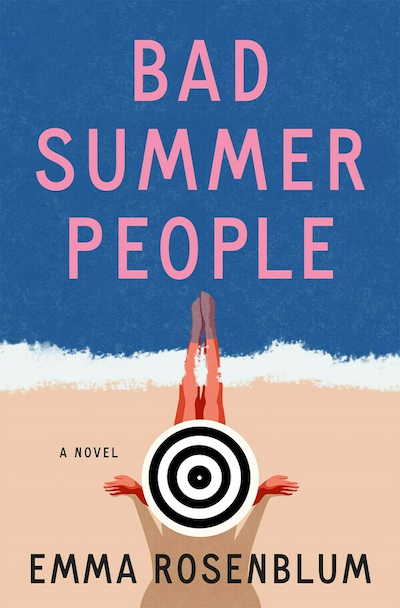
Yes, it’s only October. But my money is on Bad Summer People as the best beach book of the summer of 2023. Set in Salcombe, a made-up community on Fire Island—not the like the gay Pines, more the reclusive and ritzy Saltaire—this book, in the great literary tradition of Peyton Place, has it all: adultery, fashion, tons of gossip, backbiting, lying, hot sex with the tennis pro, tasteful plastic surgery, alcoholism, and even a corpse. Plus the sort of casual racism and classism liberal one-percenters indulge in. It opens with a prologue, set at the end of August, in which a body is discovered face down off the boardwalk. The book then backs up to late June, as the all-white residents arrive from the Upper East side and Scarsdale for the start of a new season. From there we follow the tumultuous summer in chronological order, moving quite handily among a group of narrators, from the above-mentioned Stanford tennis coach to the Filipino nanny to the gay Yale student/bartender and many more. At the gravitational center of the book are Jen Weinstein and Lauren Parker, the “it moms” who married into Salcombe—their husbands are best friends—and oversee the social action. Not another word from me, lest I spoil any of the fun, except to say the identities of both the victim and the murderer pack quite the punch. This book really hits the sweet spot for popular fiction and will appeal to a broad swathe of readers.
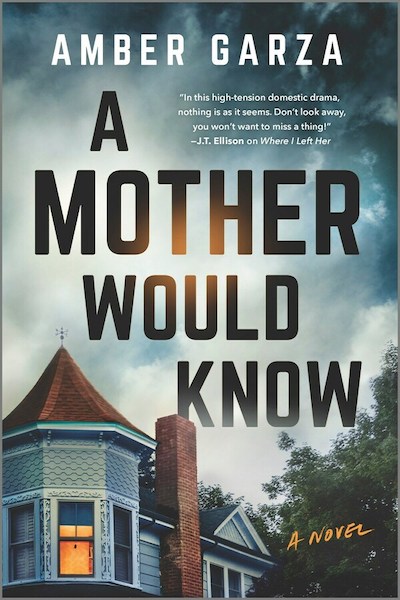
Remember We Need to Talk about Kevin, Lionel Shriver’s dark novel about a mother’s fraught efforts to understand her violent son? Here, neighbors believe Valerie Jacobs has set up her own version of Shriver’s book: her son, Hudson, suspected years ago of a violent crime, is back home and seems eager to live off mom. Valerie’s daughter, Kendra, is against the arrangement. Valerie has always spoiled Hudson, Kendra says between snapping at her mother’s attempts to be a new grandma and pushing miracle cures for Valerie’s seemingly encroaching Alzheimer’s disease. Then a shock crashes into the setup: a young woman is found murdered in the neighborhood and Valerie’s neighbors immediately point the finger at her home. Even Valerie herself suspects Hudson, except when she’s suspecting herself and her memory gaps. Garza (When I Was You) excels at making our heads spin as facts emerge, some from the present and others the past, adding to both the murkiness and the drama. This tale is constructed on a scaffold of slights, family grudges, deceit, and quiet love, all of which build to an out-of-the-blue reveal. This isn’t—thankfully!—as dark as We Need to Talk about Kevin, but it’s every bit as gripping.
Sophocles’ play Antigone, written in 441 BCE, is here pulled into modernity by Burt, a consultant for the United States Holocaust Memorial Museum. The ancient play sees brothers instigate a civil war, and one of their daughters, Antigone, defies her uncle and puts her brother first. So it is in The Dig, which opens amid a civil war, this time in 1993 Sarajevo, Bosnia. Andela, age three, and her brother Mujo, six, are found by American construction-worker brothers in the rubble of a destroyed building, their dead mother nearby. Their Antigone takes place in Thebes, Minnesota, where the children, now called Antonia and Paul, have a “typical American upbringing, blah, blah, no drama,” after being adopted by Eddie King, one of the brothers. Except it’s not really drama free. The blond and hearty residents of Thebes are not ready for the dark-haired, reticent Antonia and Paul, and Eddie dies of an overdose when he can’t handle the new responsibility. What the King family decides for the town is taken as local law, but Antonia defies her Uncle Christopher, graduating from law school and decidedly not working for her family. Paul rebels even more, protesting the Kings’ development of a new shopping area that displaces his Somali immigrant friends and then disappearing. Finding him and getting to the bottom of their pasts, both in Bosnia and more recently, will draw Antonia into a storm of lies and corruption and a fierce battle for control of her life. Feelings when ambition and family collide are no different today than in 411 BCE, and the resulting spectacle is no less captivating.
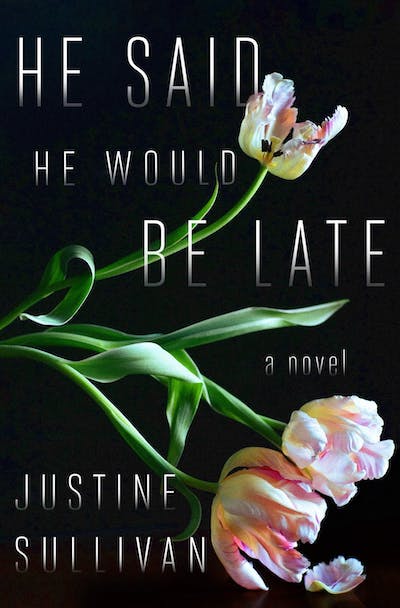
Ready for a psychological game? Liz Bennett wasn’t, but that’s what her marriage has turned out to be—but is the game a one-sided figment of her imagination, or is her husband, Arno, an adulterer who’s playing her along? The backdrop to the maybe game is deep unhappiness and insecurity on Liz’s part. She and Arno are new parents, and motherhood is more difficult than she imagined. It’s not very enjoyable, with baby Emma looking at her “like she’s an elderly spinster I’m grooming for her banking information,” and no time or energy to write a follow-up to her semi-successful first novel. At least she has Arno, who’s worried about his wife’s happiness and shows love and support for her at every turn—a steadfast situation that she’s terrified to lose after she sees a text to him from an attractive coworker, a message that could signify a romance. Liz is soon spiraling into an abyss of fear and suspicion, one that’s incredible enough to keep readers turning the pages but believable enough to elicit real empathy for this broken soul. Sullivan has a way with characters, using dialog and Liz’s astute, cutting observations to bring Arno, crunchy-granola nanny Kyle, and bitchy-perfect sister-in-law Rose (“I’ve been up since 4 a.m.”) to gossip-worthy life. Fans of women’s fiction will eat this up.
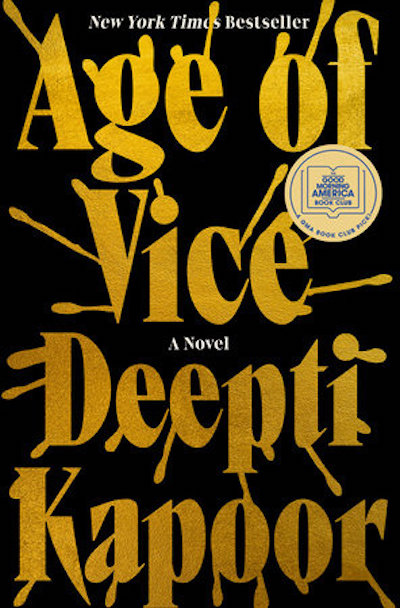
A bold, ambitious, and sprawling work that can only be described as Dickensian, so rich is it in socioeconomic observation, unforgettable characters, sentimentality and violence in equal measure, and, of course, the pleasure of plot. Like any good epic, the novel opens in media res, at a horrific auto crash that kills five homeless people. Behind the Mercedes’ wheel is Ajay, loyal servant to Sunny, an enormously wealthy playboy whose riches protects him from any retribution. But Ajay, of course, wasn’t driving the car, he’s a mere prop positioned to take the fall. How did he end up here? The novel heads back to Ajay at age eight, when he was sold into servitude, his eventual meeting with Sunny in the Punjab mountains, and the move to New Delhi, where he emerges as Sunny’s servant, drug dealer, chef, and bodyguard. Here the narrative jumps to Sunny, still obsessed with his gangster father, whose corruption and violence he wants to transcend while continuously finding himself enmeshed in it. Only his lover Neda, a journalist whose passion for Sunny is outweighed by his immorality, can seemingly reach through to him. As the novel moves among these three characters, all pushed to their very edges, readers are left to wonder whether anyone will escape alive. Brilliant and engrossing, terrifying and heartbreaking, this is one of the best books of the year. Happy to follow these characters anywhere, I can only hope this is the first in a trilogy.