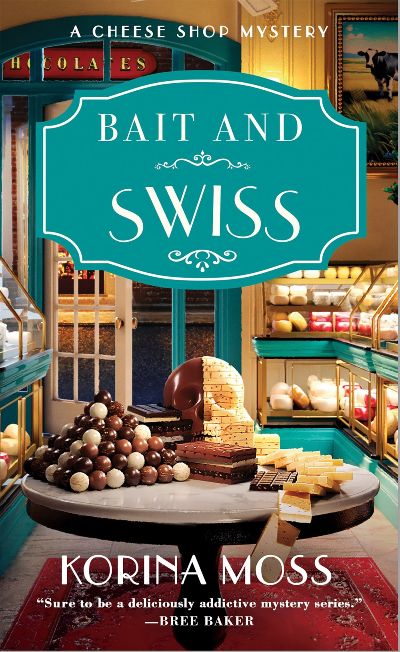
Cozy mysteries have a template of sorts. They are usually set in a small town, and often set in a small business with a friendly, plucky, sleuthy heroine. Trouble, sometimes from the past, drops into the mix to spoil the perfection. Bait and Swiss is a fine example of the genre, with all the proper elements in place from chapter one. Willa and her incredibly simpatico team from her cheese shop, Curds & Whey, preparing for their second anniversary celebration, pause to attend the grand opening of a neighboring cake shop. Surprisingly, the cake shop includes a chocolatier run by Willa’s ex-fiancé and best friend from 10 years ago. In the chaos of the opening, Willa delivers samples of the chocolates to the newspaper editor, a reporter is poisoned, and the lovely town is in a panic. Willa’s relationship with the hunky local detective is in danger, but she sleuths on, partnering in a somewhat slapstick style with the editor. Food sales are down all over the town as the population fears poison from all quarters, but friendships hold firm and instincts are strong though the who-done-it is a surprise. The recipes at the end underscore the power of cheese. Fun all around from Moss (Cheddar Off Dead, 2022).
Cozy
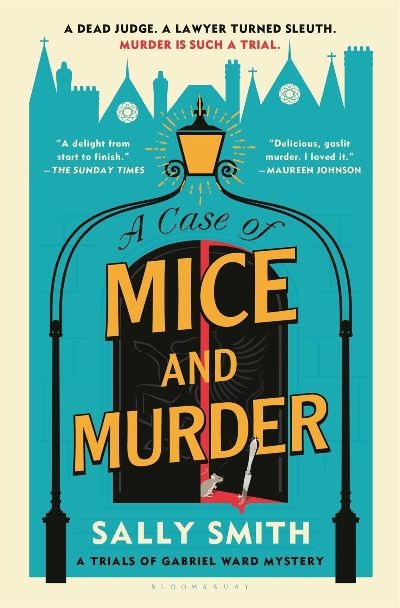
Attention anglophiles, lovers of dazzling historical fiction, and fans of a good draught of droll humor. This book is for you. Set in the Inner Temple, the heart of legal London for centuries, with its own degree of independence (not unlike the Vatican), the novel features Gabriel Ward KC, a brilliant legal mind who moves each day at the same measured pace between his chambers, which are crammed with books on nearly all topics; his office; and the dining hall. But on May 21, 1901, he emerges from his room only to discover a body on his doorstep. In fact, Ward is quick to identify it as the corpse of the Lord Chief Justice, who now has a Temple carving knife in his chest. But what is even more shocking isn’t that he is clad in evening wear, but that his feet are bare. How delicious is this plot? Appointed by the Temple’s Treasurer to investigate the murderer, Ward is paired with the eager and charming young Constable Wright, whose street knowledge turns out to be quite an asset, gaining Ward’s respect. The investigation drags the pair from the upper classes to the homeless, with an entirely separate court case—in children’s publishing, no less—providing some entertainment of its own. Quite simply, this is one of the very best debuts I’ve read in a long time; it’s sure to delight the Osman and Thorogood crews and readers of Sarah Caldwell’s legal murder mysteries as well.
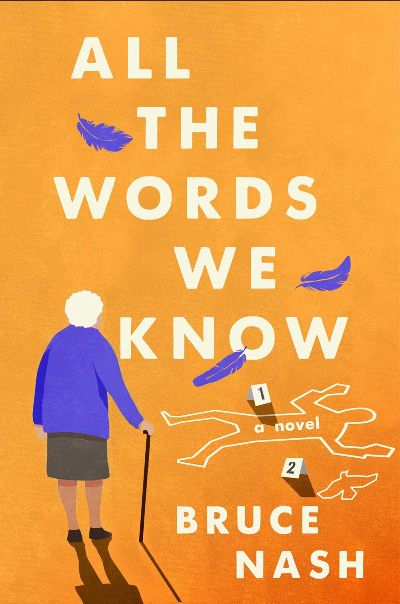
Nash offers the wonderfully unique perspective of 80-something Rose, who has dementia yet wrestles for clarity as she careens around her senior care home. Words and people are fluid in Rose’s mind. Incontinence pants become incongruence pads. Care Manager becomes Scare Manager. Management provides lengthy presentations, discussing “Duty of Care” and “Best Practice.” Then he uses the terms “Person Centered,” and “Facilitating a Holistic Therapeutic Environment.” Rose is adept at identifying lies, and liars, and she keeps returning to the room where her friend lived before she was found dead after a fall—or was it really a push out of the window? This sets Rose off on an investigation that annoys the staff and upsets her children, who only wish that their mother were more docile. Instead, she fears the Angry Nurse, who enters her room carrying a pillow…for smothering? As the book draws to a close, we see many of Rose’s deepest fears being exposed, as police cars surround the building, escorting some of the staff away. Could Rose’s campaign have finally freed the patients?
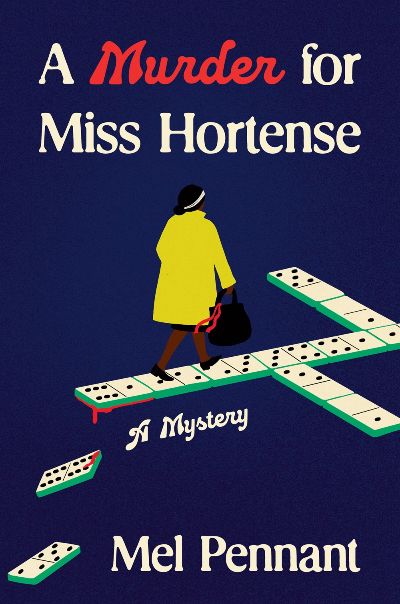
If you’re hankering for bulla cake, coco fritters, gizadas, or other Caribbean foods, Miss Hortense has you covered, with recipes for those dishes and more provided throughout this introduction to the steely “pardner lady.” Readers can learn the ins and outs of the pardner while meeting Hortense’s frenemies and neighbors—who are mostly one and the same—in millennium London and flashbacks to the city in the 1960s, but the basic premise is that it’s the kind of money club often used by those who are unbanked. English banks won’t let Hortense and other members of her Black community have accounts, so the pardner sees them each contribute money every week, with members taking turns to get the whole pot. Over the years, the club has allowed its contributors to “become the person they wrote back home and boasted that they were.” But now all the funds have disappeared at the same time that there are several deaths in the community. Even the supposedly natural demises get Hortense thinking, but some of the deaths bear the hallmarks of attacks that happened years ago, when a man the community called the brute beat several women to death and left biblical messages with their bodies. Is he back? Hortense and the other pardner members will have to do their “Looking into Bones,” which is what they call their investigations. These have the habit of “creating more dots than perhaps connections,” but allow readers to explore a tangle of love, loathing, and buried secrets that leads to a delightful Christie-like ending in which fingers are pointed and confessions made. Zadie Smith fans should pick up this winner.
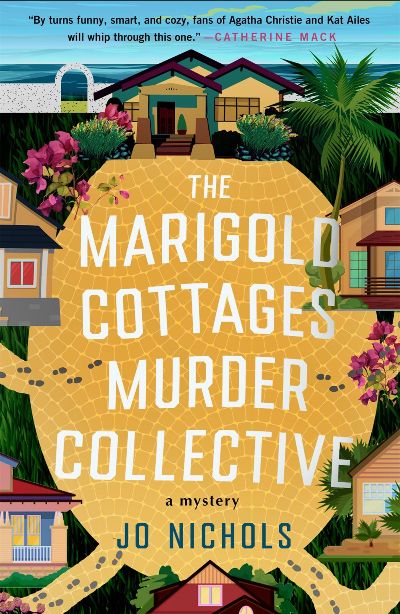
With its seven eccentric residents, charming historic bungalows, and a beautiful Santa Barbara setting just minutes from the beach, this novel will remind readers of Armistead Maupin’s Tales of a City series, although the latter lacks a mystery element. But they do both share an aging, somewhat hippy matriarch who owns and governs her own complex, and Mrs. B., the landlady of the Santa Barbara Marigold Cottages, only rents to those who need a leg up. Mrs. B.’s latest acquisition is Anthony, a reserved hulk with a prison background and the tats to prove it. Anthony makes the other tenants anxious, and when a dead body is found on the grounds of the cottages, the tenants, with the exception of Mrs. B, all point to Anthony. But Mrs. B. remains certain of his innocence, and heads down to the police station to turn herself in. Wonderfully eccentric with deep dives into many of the characters’ lives, this quickly paced read provides the perfect summer mystery.
Yes, the comparison to Only Murders in the Building is inevitable (as it is to The Marigold Cottages Murder Collective, above, not to mention The Thursday Murder Club). All are narratives of place, in which the residents of a building, or buildings, are deeply involved in the story as amateur detectives, suspects, or both. Marchfield Square inhabits the smallest block of squares in London, with many of the units—Rear Window-like—facing internally, providing residents with a great deal of information about one another, but with little opportunity for actual conversation, at least without hollering across the courtyard. Remarkably, the elderly heiress who owns the complex, Celeste van Duren, is not just still alive, but actively engaged in running it. So when one of the residents is murdered (he totally deserved it), Celeste appoints two of the tenants—Audrey, a young woman who works as Celeste’s cleaner, and Lewis, a somewhat failed novelist—to a team responsible for investigating the murder. Because as we all know, the real police can’t be trusted to do anything right. Audrey and Lewis have to work out their own difficulties, but eventually the two are seen together snooping about the Square tracking the activities of their neighbors and friends. And guess what? Everyone has something to hide. This is loaded with humor and packed with punch, and cozy readers will be sure to keep a look out for more from this Audrey/Lewis duo.
Nova Davies has relocated from London to a remote Cornish seaside town, in part to be with her fiancé, whom she is set to marry in a little more than a week. While Nova loves her job as a social worker in the local community center, she can’t help but be a bit frustrated by her clients. Must the five members of her book group—a real bunch of misfits if there ever was one—argue about everything? But that’s just the beginning of a series of misfortunes, all of which seem to point to Nova. First one of their own, a book group participant, disappears, only to have a dead body show up in his house. Then a significant sum of money, earmarked to repair the community center’s ancient roof, goes missing—could Nova really have been so dizzy that she forgot to lock up the building? There’s a lot of fun to be had here, from Phyllis, an Agatha Christie superfan who insists on using Christie’s plots to solve the murder and find the funds, to Nora, whose life couldn’t become more complicated thanks to a full-on control freak of a mother-in-law and a mom who’s stranded in South America, likely to miss her wedding. And the fiancé? Please dump him. A delight from start to finish, and sure to please cozy readers who appreciate strong characters, a great community setting, and a dollop of criminal activity. For readers who enjoy Lucy Gilmore and Emily Henry.
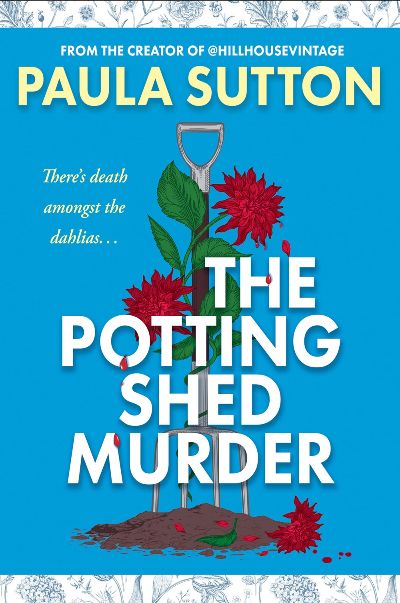
Might this book be a cozy mystery? Let’s run it through my cozy-meter and find out. One, do we have much empathy for the lead character? Absolutely. Daphne Brewster, a Black woman—in fact, the only person of color as far as the eye can see—has moved her husband and family out of south London to a Norfolk town called Pudding Corner to escape urban woes. She’s become so successful at selling antiques that she’s now known as the vintage lady. Still, it turns out that things are as complex in Pudding as they are in London. Two, isn’t the book too slow? No. If you want faster, go find James Patterson. The characters in this town are so absolutely delightful as they roam about the town that I would happily spend another day or two with them. Again, the name: Pudding Corner. Might that be a hint as to what we can expect? Three, is it sexy and violent? Much more yearning than sexy. And if there had been any sex, it was years ago. As to the violence, it is offstage, involving a corpse that keels over in his allotment patch—a little garden the size of a postage stamp where Brits go and plant rutabaga on the weekends. Four, is this book a stand-alone? We hope that the publisher is sensible and Ms. Sutton will be back to delight us again with Daphne and Book Two.
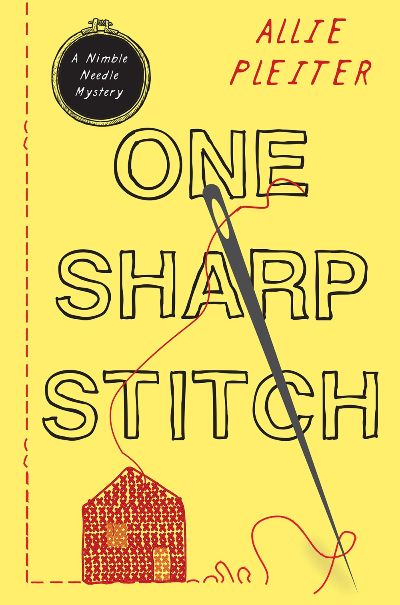
Shelby is returning home, not by choice. Her career managing a graphic-arts company is over as the company was sold, taking with it her hopes for romance with her boss. She’s had a pretty soft landing, though. Her parents are taking a month-long road trip, leaving her to manage the family needlework shop with the free apartment above. Why isn’t she happier? She feels the judgment of nearly everyone around her, from her practically perfect older sister to her old high school mate Kat who has been vying to take over the shop herself. Kat runs her own business, sharpening knives and scissors and designing and selling needlepoint canvases and high-end scissors. The first weekend that Shelby will be in charge, the shop will hold a trunk show of Kat’s merchandise. When Kat doesn’t show up to help prepare, Shelby goes looking for her, finding her in her mobile sharpening van with a knife in her chest. The police and all others rule this a terrible accident, but not our Shelby. Her unauthorized sleuthing isn’t the only tension in the story. She needs to run the business, maintain the proper position in the community and deal with her sister’s tacit criticism of whatever she does. To assist her, Shelby starts building a community of needlepointers of her own age group, men included, and of course adopts a stray cat. The charming town, Shelby’s renewed love of needlework, and her growing group of friends will have readers eagerly awaiting the next installment. Just as many cozy mysteries include recipes, this one ends with needlepoint patterns.
In this latest visit to the lighthouse library on the outer banks of North Carolina, locals await a YA book festival featuring a recently local and very popular author of a fantasy series. Our librarian and amateur sleuth, Lucy MacNeil, is surprised to find this gentleman on her doorstep wanting to talk. She escorts him to the deck, goes to retrieve refreshments, and returns to find him dead of an arrow shot. To say that chaos ensues is an understatement. The new widow has political ambitions and intends to use this to launch her campaign, local teen ultrafans of the author set up a shrine invading Lucy and her husband’s privacy, and two lesser local authors battle it out for the now vacant top spot on the festival program. The clever policing by the local force is, of course vital, but, as usual, the little details that our research-minded librarian provides begin to tie things together, though the culprit may come as a surprise. The local color and community spirit shine, and the quirky personalities are never more so. While this is certainly a cozy, it is never dull. The ending leaves clues promising changes, so readers will look forward eagerly to the next installment.