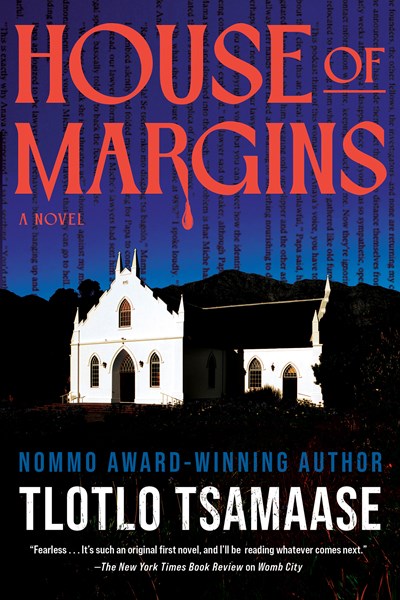
South African author Tsamaase wickedly combines the Western-horror haunted-house trope with non-Western context, infusing House of Margins with cultural symbolism and myth while drawing on Indigenous folklore and historical traumas. The book follows emerging author Anaya Sebeya, who has been invited to a prestigious residency at Günter Huis, an eerie colonial mansion on the slopes of Devil’s Peak, where she and four other emerging writers are competing for a grand prize. Being in the mansion inflicts distorted visions and terrible supernatural visitations, pushing Anaya to tell a story no one else dares to tell. Alternating chapters present Anaya’s story and that of her sister Ranewa, who searches for Anaya after she goes missing when the annual Günter Huis Fellowship is awarded, and shockingly, one of the competitors, Miche, launches a true-crime podcast about Anaya’s disappearance. The writing is tense and gives the immersive feeling of being trapped in a nightmare, intertwined with themes of abuse, colonialism, cultural appropriation, and spiritualism. The format combines Miche’s podcasts with Ranewa’s investigation, which jumpstarts when Ranewa discovers her sister’s long lost cell phone on her bed, still charged and sending messages. Readers will unravel as Anaya does, doubting what is true and who and what can be saved—this Afrofuturistic gothic horror story is full of keen observations on how postcolonial racism and the erasure of African culture are still in effect today.—Dodie Ownes