Life could be better for Hayden McCall, a diminutive, red-headed (don’t call him cute!) eighth-grade teacher in Seattle. The bad news: While hanging out at a gay bar, he manages to get kicked in the eye by Camilo, a beautiful go-go boy. The good news: Camilo invites him home for the evening and turns out to be quite a gentleman. The worse news: Hayden wakes up the next morning to find Camilo gone, his bull terrier needing to be fed, and the police knocking at the door. With that, we are off and running as Hayden searches for Camilo, accompanied by two of Camilo’s best friends, both lesbians: Hollister, who’s African American, a risk taker, and in possession of an impressive mohawk; and Burley, who’s a giant, a baker, and a total stoner. Both women are keenly aware that the cops are not going to take the disappearance of a young Latino man seriously, a go-go boy at that, and it is up to them to save their friend. This novel is a wonderful mix of lightheartedness—no surprise, sidekicks Hollister and Burley provide plenty of laughs—and seriousness, as we learn that Venezuelan-born Camilo is a “Dreamer” whose stay in the U.S. is precarious. Congratulations to Osler for creating a mystery set in the LGBTQ community that is both compelling and heartfelt. Bring on the next installment!
Cozy
Here’s a conundrum. Series readers love returning to the familiar: the nosy next-door neighbor, the long-term fiancé, the super intelligent dachshund, and, above all else, our detective. At the same time, readers expect the newest book to shake things up, presenting our hero with changes and challenges. Authors looking to pull this off would do well to consult Jane Austen’s Lost Letters—the 14th book in the Josie Prescott series—a textbook on how to balance the old and the new. Josie, an extremely successful antiques dealer, meets an elegant older woman who presents her with a box, then disappears. The box, from Josie’s father, dead these twenty years, contains two of Jane Austen’s letters. The missives set off a series of events that pulls us into the worlds of academia, rare manuscripts, television production, historical-autograph authentication, and Josie’s relationship with her dad. At a point, the book shifts, and Josie is no longer just investigating, she’s fighting for her life. A traditional mystery with a soupçon of the thriller, this book will appeal to a large swath of mystery readers. And despite the many previous volumes, it works beautifully as a stand-alone
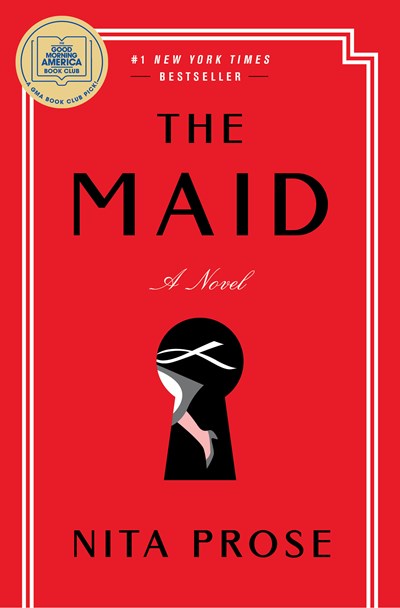
Molly Gray struggles to decipher social cues. Her speech is formal and old-fashioned. She’s obsessed with cleaning—a real advantage in her job as a maid in a grand old hotel. Gran, who always helped her navigate the world, recently died, leaving 25-year-old Molly an orphan. Readers may be quick to diagnose Molly as being on the autism spectrum, but Prose wisely avoids such language, forcing us to make sense of Molly on her own terms. Then comes the day when the maid goes to clean the room of the wealthy and loathsome Charles Black, only to find him dead, likely the victim of murder. Molly’s world is turned upside down as she finds herself the lead suspect. Suddenly, she has to do the unthinkable: reach out to others for help in saving herself. The Maid is a lovely, uplifting exploration of friendship and the power of difference. As Gran would say, “We are the same in different ways.”