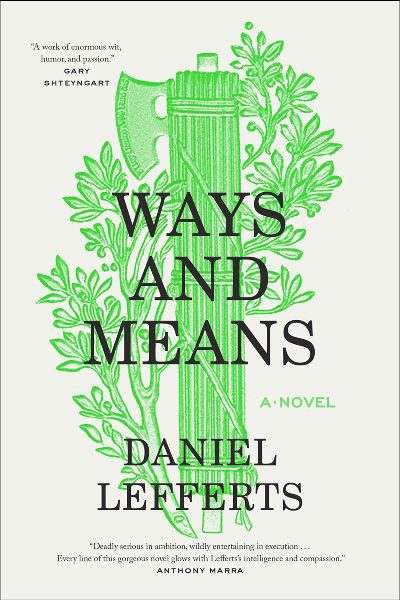
It’s thrilling to discover a debut this brilliant, full of wonderment, humor, and above all, love. Alistair McCabe, gay and handsome, smart and funny, arrives at New York University from upstate to pursue his destiny as a financial whiz kid. He’s got the talent, the obsessiveness, the drive—and the desire to help his Mom, who has done so much for him. Sweet, right? But being a brainiac isn’t quite enough—you need to fit in with the finance bros—and a much coveted banking internship leads to, well, nothing. Except for more debt. Fortunately, there’s Mark and Elijah, a couple ten years or so older who take him in as their third paramour (we’re spared “throuple”). Mark, a sort of small-time trust funder, and Elijah have their own set of troubles, which they’re happy to cast aside whenever Alistair visits. Alistair is eventually offered an opportunity to work for an elusive, sinister billionaire and he jumps at it while continuing to investigate the mogul’s wealth. What he discovers catapults him out of the life he had come to know into one both terrifying and wildly anxiety producing. Lefferts moves around the narrative with ease, visiting family and friends, picking up a character or two then setting them down. Slowly these scenes fall together and this expansive novel becomes far greater than the sum of its parts. Comparisons to Hanya Yanagihara’s A Little Life are inevitable, and in both books there is plenty that horrifies. But also, like A Little Life, it’s ultimately friendship that saves the characters. And us as well.