

Book of the Week July 30, 2026
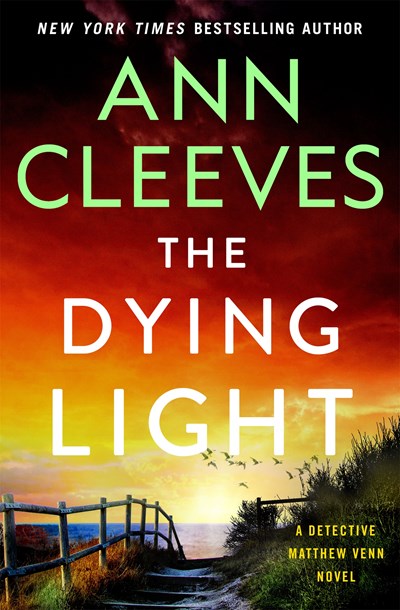
As with all of Cleeve’s novels, this one centers on a violent act that summons a whole community, from the police to a rising politician and from a small group of teens to the media eager to expose the familes. At the center of the novel is DI Matthew Venn, whose gentle demeanor and persistent inquiry move the storyline ahead, peeling the novel like the proverbial onion. The tale takes place in the UK in the midst of a scorching summer, when Venn has been called in to investigate the death of a young woman found floating face-up in a pool. But it’s not just any pool—the luxurious location is owned by the girl’s friend, Hannah, who is also missing. Social media, secrets, and unrest all go far to crack this mystery, exposing what is left unsaid. A sophisticated, fast-moving novel that many readers will relish.—Brian Kenney

Unnerving and heart-pounding, this sixteenth book in Paul Doiron’s Storm Tide series recounts a year in the life of Maine game warden Mike Bowditch. And what a year it has been. It begins with the murder of well-off Brian Malloy, discovered—along with his wife—in a fire that destroyed their mansion. Bowditch tries, but fails, to save them; only their baby lives beyond the fire. Next in the murder line-up is Axl Deming. Once accused of a brutal rape, Axl is found on a frozen train track, severed in half. Are the two incidents somewhat related? Bowditch himself is worried about his small family. His wife, Stacey, is due to give birth in weeks, while finding herself being stalked by a giant with a white van. Bowditch is facing a disciplinary hearing that could destroy his career, while he is still occupied with covering frozen bays and remote reaches while in the line of duty. A deeply felt work of crime fiction that never shies away from discerning good from evil.—Brian Kenney
Readers of crime novels are used to main characters being flawed though essentially working on the side of right. Shawnee, or Shaw, Connolly is no exception. A crack crime-scene expert especially known for her skill with fingerprints, she is faced with multiple heart-wrenching crimes. A long-missing young woman is found in her car in a lake, creating a daunting but not impossible fingerprinting task; an elderly woman is found outside her home, dead of exposure with her house wiped clean. Shaw is also facing her younger son being bullied, returning romantic feelings for her ex, and recovery from the physical and emotional trauma of finding and convicting her sister’s killer. This killer provides the main conflict, offering to reveal burial sites of other victims, but only if Shaw is involved. She reluctantly complies, but struggles with a search through stark landscapes in harsh weather. Shaw is a woman with much to commend her as a character. We will all look forward to the next book.—Danise Hoover

Though the subtitle of this novel is “a mystery,” it is not a standard of the genre as readers might expect. Declan left Ireland 40 years ago because he was wrongly accused of disloyalty to the Irish republican cause. In New York, he runs a successful business and has a large, prosperous family. He receives a note that forces his return, accompanied by two of his sons: Terry, an airline pilot; and Brennan, a priest. Family and friends welcome them wholeheartedly. This story is set in the 1990s, when sectarian issues are still quite hot. Terry is grabbed off the street and held captive, escaping by his own wits, but this is part of a different story from the one that brought Declan home. Leaving their father out of most of the dirty work, the sons do some deep investigation and figure out part of what’s going on, but the rest of the story, while explained, is not totally solved. If you have been longing for a trip to Ireland but haven’t the time or funds to take it, reading this will give you a real travelogue-like view of the country, especially of Dublin.—Danise Hoover

“Just when I thought I was out, they pull me back in.” Those classic lines spoken by Michael Corleone in The Godfather, Part III are a running theme in Heider’s terrific follow-up to her acclaimed debut, May the Wolf Die. Shaken by the traumatic events of the previous book, Nikki Serafino, a liaison between the Italian police and the U.S. military stationed in Naples, is lying low, teaching a self-defense class, when she’s rescued from a shakedown and mugging by Benedetto De Rosa. He is the right-hand man of Tito Calandra, Nikki’s childhood friend who has become a powerful figure in the city’s underworld. Not wishing to be drawn back into that world, Nikki refuses De Rosa’s request for a favor. But it’s not so easy to disconnect from the corrupt il Sistema (the System) of organized crime that is so much a part of Neapolitan life, as Nikki discovers when she agrees to help undercover cop Valerio Alfieri (who has his own issues with the Comorra) investigate a murder. The victim is a young nanny at the historic Chiesa del Gesù Nuovo, with the crime witnessed by Valerio’s mother and the daughter of the U.S. ambassador. Once again, Heider brings the beautiful and complicated city of Naples to life in all its elegant and squalid splendor while telling an exciting, dark, and violent tale with a high body count. Readers will eagerly await Nikki’s next quest for justice.—Willy Williams

Disgraced and unemployable academic Dela, short for Delarobia, has taken over her uncle’s PI business. Her father, a grumpy academic who’s drifting into dementia, railroads her into solving a murder at a small college–a crime that’s two weeks old with no solution in sight from the local police. Oh, what a cast of characters is presented! Conniving academics, drunken faculty wives, smarmy college presidents, Dela’s aged and blind godfather (is he an asset or a complication?), to say nothing of the police force. Dela takes them all on, with an understanding of the situation that comes from her having experienced campus politics first hand, and from a deep, if jaded, comprehension of the human psyche. She doesn’t always see things clearly, but she is smart and dogged. The ending is not exactly just, and somewhat lumpy, but readers learn the truth. What sets this apart from most is that the author, a novice at mysteries, is an accomplished novelist who brings her talent to creating texture and nuance that is not usually found in even the finest genre fiction. Blunt Instrument is a pleasure to read.—Danise Hoover

An absolute joy from start to finish. In this fourth book in the series, veterinarian Peter Bannerman finds his brother Sam living in a Winnipeg apartment house, with a dead neighbor whom the cops believe has passed on as a result of accidental autoerotic asphyxiation. But once the cops have hauled Sam in for questioning, their focus shifts, and he is eventually arrested for the murder. Sam has more than his share of mental health issues, and having him as a brother is challenging to say the least. For starters, Sam’s more concerned with finding one of the kittens who has gone lost—it belongs to his dead neighbor—than finding the real criminal and maybe springing himself from jail. But, luckily, Sam has Peter, who may be incredibly frustrated by his brother, but is certain that he would never hurt anyone, beast or human. Unfortunately, it becomes Peter’s job to prove to the cops Sam’s innocence, discover the murderer, and locate the missing kitten. Fortunately, he has assistance from Pippin, his dog and a Western Canadian champion sniffer; and his wife Laura, who provides Peter with some useful critical thinking. In the end, we are taken down a path rife with ghosts and murderers and that resolves the past by investigating the present.

A cryptozoologist’s views are not exactly recognized by the whole of the scientific community. But a dead woman in small-town Wisconsin brings law enforcement to cryptozoologist Morgan Carter, as they know her as a source of assistance. Lydia Palmer was found in a rural area with a broken neck and her throat ripped open by what could be the “Beast of Bray Road,” a local legend that has been capturing imaginations for years. Morgan is pretty sure from the outset that there is some human source to this mystery. Lydia, a widow with an adult son disabled from the car accident that killed her husband, was always looking for a way to make money. She wasn’t particularly wise about her methods, but there is still no good reason for her to have been in dark woods in the middle of the night. Sightings of the beast seem realistic, but Morgan has a good idea of what caused the deep scratches in Lydia’s car and body, and it’s not what people think. Another dead body and faked historic documents, among other things, lead Morgan to a conclusion that is worse than any beast. Though part of a series, this is nicely framed so that the back story stays in the background and readers new to Morgan and trusty hound Newt can keep up.

Taut and intense, this novel is sure to set every reader who picks it up on edge. Charlie Kilgore was an infant 25 years ago when, at Idlewild, their family camp, his father murdered a man, went on to stab Charlie’s mother, left her for dead, then drifted off into the White Mountains of New Hampshire, never to be seen again. It’s a legacy of horror that Charlie hears from time to time as he grows up, including how his older brother saved them both by hiding them in an ancient rowboat on the lake. But soon enough, WASPY, old Idlewood returns to its annual summer silence and secrets. Until Charlie, an aspiring journalist, blows everything up. While writing and editing a podcast about the camp, Charlie weaves together various narratives that point to an even greater story than the murder, exposing the truth, awakening the past, and placing himself in danger. What Happened Next is certainly one of Hill’s best works with its sharp analysis of families and powerful presentation of the individual in an environment where no one can be trusted.