A likable duo is at the center of Broadchurch-creator Chibnall’s debut: detectives Nicola Bridge and her newbie partner, Harry Ward, dubbed Westlife for his boy-band looks and first name. Small-town Fleetcombe, on England’s Dorset coast, is the setting; it’s Nicola’s hometown, and she’s back to separate her husband from an affair, a plot line that creates a realistic undercurrent of desperation that matches the bizarre crime facing the new partners. The naked body of a man is found tied to a chair on a road near town. That’s odd enough in Fleetcombe, where sharp words at the local pubs—one of them the White Hart of the book’s title—are about as violent as it gets. But there’s more: the body has a stag’s antlers affixed to its head, a sinister touch that eager Harry tries to tie to mythology and local history, only to be brought back to earth by his more practical and seasoned colleague. Work the evidence, she says, setting the two on a winding path that creates a solid procedural enjoyably filled with oddball townspeople, personal travails, the inevitable local criminal element, and one very savvy little girl, a character whom readers will want to swoop in and save. This absorbing thriller shows all the hallmarks of having been written by a master of TV drama.

Traditional
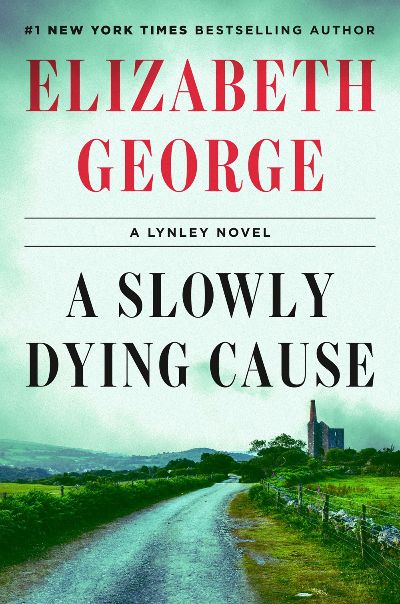
Characters of all sorts and types, many unpleasant at best, fill the pages of this, the 22nd Inspector Lynley novel. There is a complicated scheme to buy the land or mineral rights in an area of Cornwall to mine lithium. The sleazy agent of the mining company finds the murdered body of Michael Lobb, tin craftsman and major holdout to the plan, and thus begins the search…for the weapon, for the motive, for the truth of the matter that forms the rest of the skillfully built puzzle that makes up the book. Bea Hannaford is in charge of the case (old friend Lynley doesn’t show up until much later) and focuses on Kayla, the the very much younger wife of Michael; his ex-wife; and his grown children as suspects. The story is eerily filled in by Michael himself in chapters interspersed with those on on the investigation. Even though all the alleys, many blind, are followed, it is the tiny pieces and astonishing happenstance that bring everything to a factual, reasonable end, with Lindley of course providing wisdom. After all this time, it’s gratifying to see how the author can take this tangled skein of a story and piece it out to a smooth conclusion.
Charles Lenox, detective in Victorian London, has been with readers now through 15 adventures, starting as a rank beginner but gaining a stable family life and a thriving agency with a range of detectives covering all sorts of cases. He is set to meet his cousin’s daughter, who’s arriving from India after her father’s death, as he has been named her guardian. He is drawn out of recovery from his last perilous case by his old housekeeper and a strange connection to an unsolved murder from years ago, with the “why” far more important than the “who.” As in the previous novels, the mystery is important, but it is the setting of Victorian society and mores that makes it all come alive. Times are changing though: Charles’s wife, Lady Jane, is demonstrating in public for women’s suffrage and his niece wants to study economics, but as yet class and status rule over all. Traveling through London with Charles and his cohorts is a treat, and the next excursion is likely to be as well.
Jolene finds herself in the lobby of city hall when the mayor of Phoenix, Arizona, gets stuck in an elevator. With a job as a TV reporter, she gets the exclusive on the mayor’s rescue. But her instincts go into high gear when she talks to a small-business owner who believes some shady deals are happening in the city government. When he later dies in a car crash, and the family doesn’t want to talk to her or anyone, she begins to question if lucrative government contracts and the people responsible for them are to blame. It doesn’t help that Jolene’s editor wants her to cover a cupcake story and drop the city-hall case. When she begins to receive death threats, she’s torn between wanting to stay alive and not letting injustice slide. Estes has a background in television reporting, and she nails how to tell a story with strong characters whom readers can relate to. The compelling mystery and pursuit of answers make Jolene a fun and engaging amateur detective. The next entry in the series (the previous is Off the Air) cannot come fast enough
Oak Hill, NC is a town where nothing much in the way of crime happens. Then, in the space of a few days, there is murder, robbery, and arson. Jacob Sawyer, someone who hasn’t been seen for 15 years, is back in town, though no one thinks he is the cause. Grace Bingham, local police detective and Jacob’s abandoned love interest from before, is under time pressure to solve the crimes without offending anyone important. Jacob’s back because his mother, beloved in the town, is dying of cancer; Calvin Dockery, an extremely wealthy local who pulls all the strings, is also dying. The current crimes harken to unexplained events of the past that caused Jacob to leave. The story moves from the present to the past and back again, gradually revealing what happened. Grace and Jacob are undeterred in their search to connect what is happening now with what happened in the past regardless of who is involved. Money is power, and power is very dangerous here, and those with it are willing to spare no one. Resolution is not easy, but very satisfying in a book with a great deal of atmosphere and local resonance.
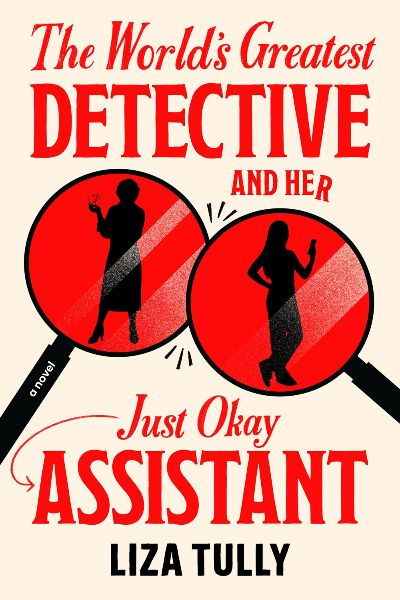
A traditional mystery full of quirky characters and humorous situations, this feel-good narrative is told by Gen Z’s Olivia Blunt, who remains ticked off with her famous boss (low wages, no opportunities for growth, hostile environment), Boomer Aubrey Merritt. Olivia dreams of being more than an assistant, but in the meantime she’s soaking up everything she can about the job from Aubrey (she has to retire or die someday, right?) while evaluating possible cases. Which is how she and Aubrey end up on Vermont’s beautiful Lake Champlain, where they’ve been hired to investigate the murder—or is it suicide?—of Victoria Summersworth, the matriarch of a family that owns a sprawling resort on the lake. Readers will enjoy the cast of largely middle-aged family members, employees, and general hangers-on as Olivia and Aubrey grill each and every one of them. The ending may be totally surprising as Aubrey delivers quite the denouement in the tradition of Agatha Christie.
Cleeves, well noted for Vera, Shetland, and others, first wrote a very different series of mysteries that are soon to be newly available in the United States. George and Molly Palmer-Jones are our amateur sleuths. George, retired from the Home Office (we don’t really know what he did while working), and Molly, a retired social worker, make a wonderful team. Steady, trustworthy, George, with authority; warm, sweet, Molly with the ability to get people to talk to her, make an excellent alternative to the police that no one seems to value. Tom French, a young and seemingly popular leader of the local “twitching” community, a group that travels to find rare birds, is found murdered. The father of a local asks George to look into it. The body has been moved and it is not apparent how or why. George, a birdwatcher himself, can maintain a connection to the astonishing rivalries and intrigues involved in this rabidly passionate community, the members of which travel great distances and endure privations at the merest hint of a rare-bird sighting. The lives and personalities of Cleeves’s characters are complicated and unexpectedly overlapping, and while Molly quietly seeks to understand the human aspect of the crime, George travels for information. This is a wonderful example of the genre. The characters are strong and beautifully drawn, and the landscape integral to the story. Best of all, there is a message from the author discussing her circumstances when writing this and critiquing a work that she obviously loves. Happy to say, there will be more to come.
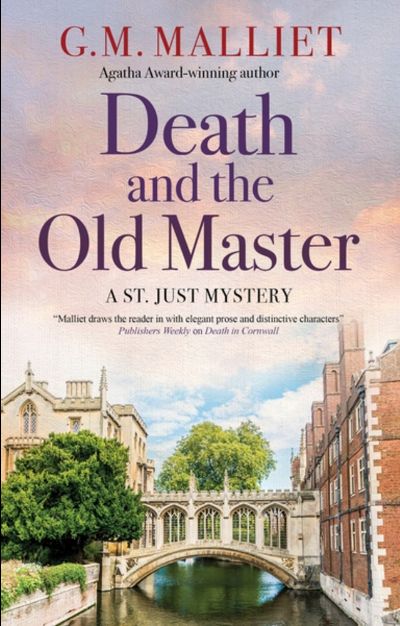
Set in the rarefied atmosphere of a Cambridge college, this excellent mystery has Detective Chief Inspector Arthur St. Just interrogating a wide assortment of characters—from the college porters to art historians, from curators to super-rich American graduate students—all to discover who killed Sir Flyte Rascallian, the master of his college and a renowned art historian. Why kill Rascallian? Because, we are led to believe, he may have recently inherited a Rembrandt, unleashing no end of speculation. Excellent art mysteries are always rich in atmosphere and complex in plot, and Death and the Old Master does not disappoint, bringing the reader as far back as the Monument Men (and Women) who worked during World War II to recover and restore stolen cultural treasures. A sophisticated and effortless read that is one of Malliet’s very best.
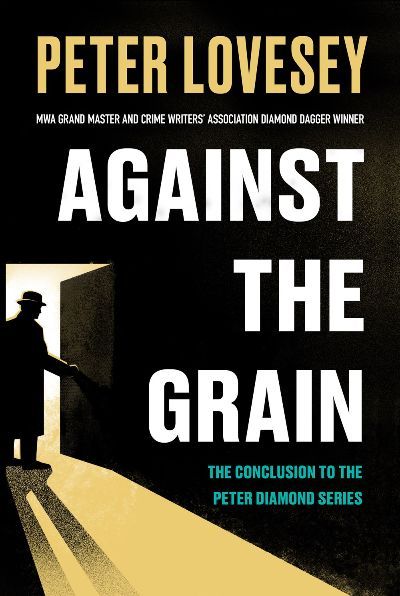
Thirty-two years ago, curmudgeonly, old-school Detective Superintendent Peter Diamond of the Bath CID made his literary debut in the Anthony Boucher Award-winning The Last Detective, exonerating a woman accused of murder. Three decades later, the seasoned cop, much to his dismay, is under pressure to retire. For Diamond, whose identity is tied to his job, “retirement is the waiting room for death.” But his partner, Paloma, convinces him to accept his former colleague Julie Hargreaves’s invitation to visit her in the quaint village of Baskerville. Leaving the mean streets of Georgian Bath for rural Somerset, Diamond soon learns that Julie has an ulterior motive for his visit; unable to proceed further in her inquiries due to a physical disability, she wants her old boss to reexamine (unofficially) the manslaughter conviction of farm owner Claudia Priest for the suffocation death of a man in a grain silo. Julie suspects that the fatal accident was murder and that someone other than Claudia was responsible. Embarking on a busman’s holiday as an undercover detective, Diamond aims to solve his first village mystery, even if it means mucking in real mud (including reluctantly helping a cow give birth). As he tries on different amateur sleuthing hats (bumbling Columbo, nosy Miss Marple), he begins to learn things about himself that reveal there might be a possibility of a good life after retirement. MWA Grand Master Lovesey bids a fond farewell to his protagonist with this bittersweet series finale that mixes a cozy Midsomer Murders setting with colorful characters, surprising twists, and plenty of heart and humor.
Don’t say I didn’t warn you. This book will have you quickly rearranging your life so that you can get to the all-so-worth-it ending ASAP and without any distractions. A classic closed-circle mystery, it features nearly 300 women and practically no men on a literary cruise to nowhere called the “Get Lit Cruise.” The cruise has been organized by best-selling author and writing guru Payton Garrett, who’s brought along some friends to lead the seminars. These include an MFA frenemy known as the ghostwriter who, under the pseudonym Belle Currer, is a well-known mystery writer (we first met her in Donovan’s The Busy Body). Belle is hands-down one of the most wickedly droll narrators in mysteries these days—hip, full of fun, yet still capable of being terrified. And terror there is, when murder visits the high seas, leaving corpses in its wake. It’s easy to compare this novel to those from Agatha Christie and Anthony Horowitz, but Loose Lips is very much its own thing, and Belle very much her own unique character. I can’t wait to feature this book in next spring’s book discussions.