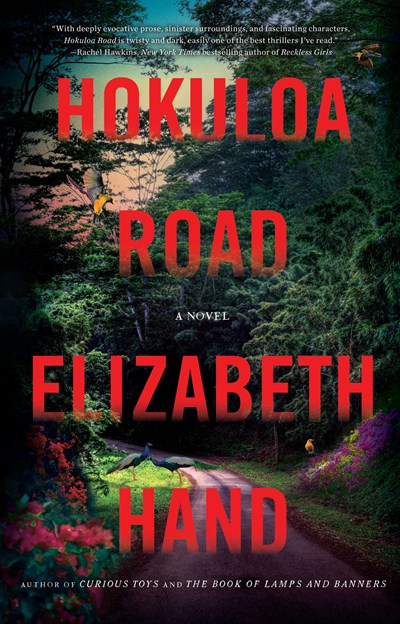
Grady Kendall has lived his whole life in Maine. An out-of-work carpenter—we’re in the third month of the pandemic—28-year-old Grady is living with his mother, with his one sibling in jail and his girlfriend long gone. So when the opportunity comes along to work as a caretaker in Hawaiʻi for billionaire Wes Minton, Grady jumps at the chance. But as beautiful as Hawaiʻi might be, there’s an unsettling undertow. With tourism on hold, more people are without homes, sleeping rough on the beach. Drugs, opiates especially, are everywhere. A shocking number of people are missing, their names memorialized on a wall. And Hokuloa Road, a remote part of the island, is said to be dangerous—for many reasons. When Grady learns that Jessie, a young woman he met on the flight to the island, is among the missing, he makes it his job to find her. Eventually this takes him even deeper into the wilderness, facing fears both man-made and mythological. This is a strong, unsettling narrative that manages to stay centered on Grady while he roams in search of the truth. Clear writing, a brisk pace, and a growing sense of dread make for an excellent work of crime fiction.
Mystery & Detective
Jay and Cindy have quite a history. Back in the ‘90s they were husband and wife, soap-opera stars, and a successful musical duo. Then Cindy came out as gay, and Jay quickly followed, sinking their entertainment careers as fast as you can say “don’t ask, don’t tell.” Today the two are still buddies, share a home in Palm Springs, and have recently launched Hooray for Hollywood, a movie memorabilia store—think Betty Davis’s director’s chair from the set of What Ever Happened to Baby Jane? But business is slow and money is tight, so when ninety-year-old Yana Davis, an actress from Hollywood’s golden age, approaches them to sell her vast collection of costumes and other items, they’re ecstatic. Hooray for Hollywood indeed, until they discover that they’re competing against Dylan Redman, VP at a Sotheby’s-like firm with enormous resources. This book is an absolute delight. Yes, there’s plenty of humor, and Yana is pure camp. But at the book’s core are Jay and Cindy, both struggling with loss and loneliness, both trying to make a success out of what they love. There’s plenty here to attract a broad range of cozy readers, all of whom will be back for book two.
A perfect marriage nearly implodes in this slick and sleek domestic thriller from suspense expert White. Thirtyish Emma has barely recovered from the death of her first husband, Derrick—who was inexplicably shot to death in a SoHo alley—when she meets, then quickly marries, widower Tom. Life along the Connecticut gold coast, where they work and play, is pretty darn good, and marriage with Tom is everything that Emma ever wanted. But then an NYC detective knocks on the door with questions for Emma about her marriage to Derrick, questions she would rather avoid and from that moment on, we are never on sure ground again. White brilliantly moves from suspect to suspect, including a range of colleagues and family members, never letting our anxiety lapse for a second. The very satisfying ending will have your head spinning 365 degrees at least twice. For fans of Liane Moriarty and Sally Hepworth.
Searing heat and searing pain pulse off the pages of Scrivenor’s debut novel, which brings to mind the colonially forged dysfunction described by her Australian countryman David Malouf. The sad tale, in which awful events take on an air of near-inevitability, is narrated by Ronnie, a 12-year-old girl whose best friend, Esther, vanishes one day after school. Esther wears her name “like a queen wearing her crown at a jaunty angle” and even on a normal day exudes a kind of magic, says Ronnie; it’s impossible to her that anything bad could have happened. Still, nighttime comes and Estie’s not home, and the search is on. While the girls’ movements take center stage in Ronnie’s mind, to the reader, there are three centers of gravity here. Yes, there’s Ronnie and Estie. But also starring are their mothers and other weary, disappointed women of the dilapidated town. Finally, there’s a Greek chorus of disembodied children’s voices whose chillingly detached versions of what happened alternate with the more conventionally delivered story. Brace yourself, this is something.
In too many circles in rural Ireland, doing anything fancier than, say, living in a cave is just asking for the accusation that you have “notions’‘ about yourself. The O’Reillys, racehorse owners in Dingle, Co. Kerry have embraced their notions, going as far as to have a butler (A BUTLER!) and marble floors, but their shady ways keep them immune from (open) ridicule. Dr. Dimpna Wilde, a native of Dingle who hit the road years before, is forced back into the O’Reilly’s grimy orbit when the clan’s patriarch is found dead on Dingle’s famously beautiful beach. Dimpna’s father, a vet, is accused of killing Johnny O’Reilly with an animal euthanasia drug. Dimpna, also a vet, steps right into work in her father’s practice; her new base serves as a way for O’Connor to humanize this kind, smart protagonist and as a means for the character to reacquaint herself with the townspeople and their complicated relationships. Some tense and emotional (but never cruel or gory) scenes await as Dimpna helps Dingle’s pets and farm animals; similar emotions are engendered by the murder mystery, which sees our protagonist revisiting painful scenes from decades past, including a rape. With an almost anthropological exploration of rural entanglements paired with a perplexing mystery, O’Connor’s series debut is a winner.
A delicious exploration into family, culture, and above all, food. We meet early twenties Yale Yee as she is let go from her job in a bookstore—no business—and is thinking of returning to work in her father’s dim sum restaurant. Yale’s a bit of an eccentric: no cellphone, no car (we’re in West Los Angeles), few friends, and still mourning her mother’s death. When Ba, her father, informs her that her rich, spoiled cousin, who she hasn’t seen in 20 years, is arriving from Hong Kong, Yale would rather hide in her apartment with Jane Austen. But instead, at Ba’s suggestion, she and cousin Celine end up running a food stall at the pop-up night market. Celine is everything you’d imagine: beautiful, vain, fashion obsessed, an influencer and foodstagrammer. But these polar opposites end up finding some common ground—at least enough to make the food stall a roaring success. If only there weren’t that dead customer Yale discovers, making the cousins the leading suspects. Off we head into the foodie world of West L.A.–Taiwanese breakfasts and Salvadorean pupusas as Yale and Celine try to clear their names. Chow gets so much right in this book, from the exploration of Asian cultures in L.A. to the growing relationship between the cousins. A fun start to a wonderful new series.
If you read deeply in crime fiction—from psychological thrillers to locked room mysteries—you’ll notice that each subgenre shares some similarities, like types of characters, settings, and narrative devices. This is especially true of cozies, whose readers like a good balance between the familiar and the new. But every now and again a cozy comes along in which the author not only checks off all of the boxes but does such an excellent job in the process that the book totally stands out from the crowd. This is the case with Six Feet Deep Dish, which stars chef Delilah O’Leary, whose larger-than-life personality takes hold of the narrative and never lets go. We’re in Geneva Bay, Wisconsin—a resort town a couple of hours north of Chicago—and Delilah is about to fulfill a lifelong ambition and open her own restaurant featuring gourmet, deep-dish pizza. But as opening night rolls around, she hits a few speed bumps: her uber-rich fiancé, who was bankrolling the endeavor, dumps her and disappears. Then a murder takes place during the opening, and her elderly aunt is found over the dead body, clutching the murder weapon. Delilah realizes that to save her aunt—and her restaurant—she needs to step it up and, with the help of the restaurant staff, find the killer. Droll and witty, sophisticated and credible, this is a series to watch out for.
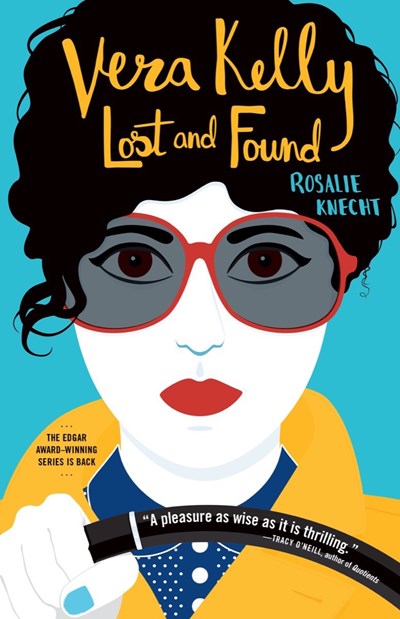
A wonderful story—if barely a mystery—this third in the Vera Kelly series has Vera and Max, her girlfriend, heading off to sunny southern California. But the trip is no vacation. Max, who comes from serious wealth, learns that her parents are divorcing. And even though her homophobic dad threw her out of the house—think of the Hearst Castle—when she was twenty-one, Max still feels the need to intercede. Turns out dad is about to marry a much younger woman while allowing a kooky occultist to get his hands on his funds. When Max suggests over dinner that she’ll inform her mother of the financial shenanigans, all hell breaks loose. And when Vera wakes up the next morning, it’s to find Max missing. Finally, Vera gets to put her detective skills to use! Knecht excels in creating character and setting. Her depiction of the lesbian and gay world of 1971—oppressed and discrete, yes, but also a strong community undergoing change—is fascinating, as is how Vera and Max navigate straight society. The resolution is both poignant and hopeful.
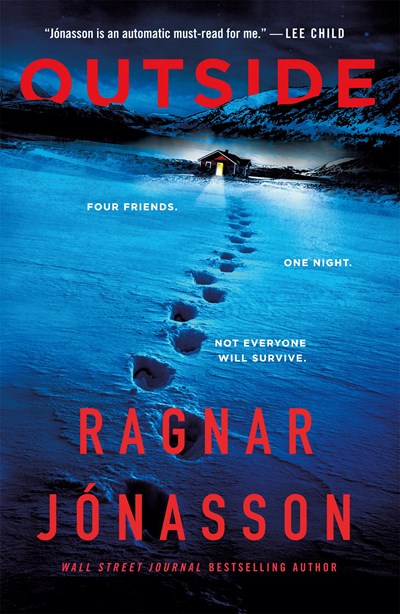
With friends like this, who needs enemies? Four buddies from college, now into early middle age, decide to get together for a mini-reunion and hike. They choose remote east Iceland—in the winter—not perhaps the most sensible decision. But Ármann, one of the group, owns a tourist company and seems to know his way around. So when they head off on the hike, with little food and no other supplies, then get caught in a blinding storm, it’s Ármann who is able to lead them to an emergency hut. But what greets them when they open up the hut is shocking, unsettling the small group. As they shelter in place and secrets are revealed, one old friend turns against another. This standalone from the best-known author of Icelandic noir makes for a fast read with as many terrifying twists and turns as the luge
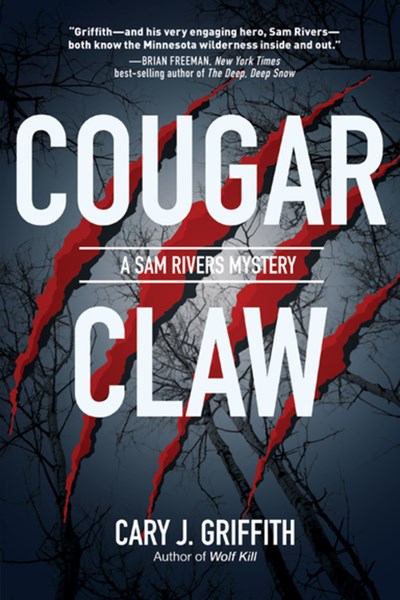
This is one of those thrillers that opens with a full view of the crime—in this case, two men ambushing a Savage, Minnesota CEO and attacking him with real cougar claws and teeth. There was recently a sighting of one of the big cats in the area, so it’s easy for investigators to believe the businessman became a meal. The local sheriff who’s running for re-election has no objection to chalking the death up to wildlife rather than crime stats….but then Sam Rivers shows up to complicate his life. Sam, special agent for the U.S. Fish and Wildlife Service, doesn’t care for bureaucracy or the sheriff, and persists in finding out what’s behind this event that looks suspicious to his expert eye. Just what looks off to Sam will teach readers about things like the structure of all cats’ paws, which parts of a person a cougar would eat, what one of the creature’s teeth embedded in a person’s spine should look like, and other juicy tidbits. In the human world that Sam deals with somewhat reluctantly, things are more complicated, as his investigation is a tangled web of an about-to-be-very-rich widow, her nosy neighbor, a journalist who’s also Sam’s love interest, and always that blustery sheriff. Sam Rivers is akin to Emily Littlejohn’s character Gemma Monroe—a likable, steadfast investigator whose work takes readers into the outdoors and the crimes it hides. He’s a character worth getting to know.